AI/ML · 2025 — Present
SynapseDeck: AI-Powered Flashcards with Spaced-Repetition
Paste your notes, get LLM-generated flashcards, review them through a quality gate, and practice them with a real FSRS spaced-repetition scheduler. Cards stream in as the model writes them.
- Role
- Sole engineer, from schema design through deployment
- Timeline
- 2025 — Present
- Team
- Solo
- Status
- In progress
- Stack
- TypeScript
- React
- Tailwind CSS
- shadcn/ui
- PostgreSQL
- Supabase
- Deno
- Groq
- ts-fsrs
- TanStack Query
- Vercel
- Zod
Overview
SynapseDeck bridges the gap between note-taking and learning. Students paste study material, an LLM generates flashcards in real time, and a human-in-the-loop review gate ensures only quality cards enter the deck. Nothing that enters is wasted: every card is scheduled with FSRS, a scientifically-validated spacing algorithm that maximizes retention with minimum review time.
The architecture prioritizes honesty about what is measured and what is estimated. The progress dashboard pulls every number from an append-only review log — retention rates, due forecasts, stability trends — so there is no invented data. Undo is a first-class feature, not an afterthought, because mis-hitting a rating on a mature card damages its schedule permanently without recovery.
The generation pipeline streams cards from Groq's free tier as they arrive, persists drafts server-side before they reach the browser, and validates each with Zod schemas shared between client and Edge Function. Rate limits protect the shared key, not bills; a refusal is designed as a visible message, never as an empty state that fell out of an error handler.
Key features
Streaming LLM generation with review gate
Cards appear one at a time as the model writes them. Every card can be edited, accepted, or rejected before entering the deck. LLM output is ~80% good; the review gate is the highest-leverage quality feature in the product.
FSRS spaced-repetition scheduler
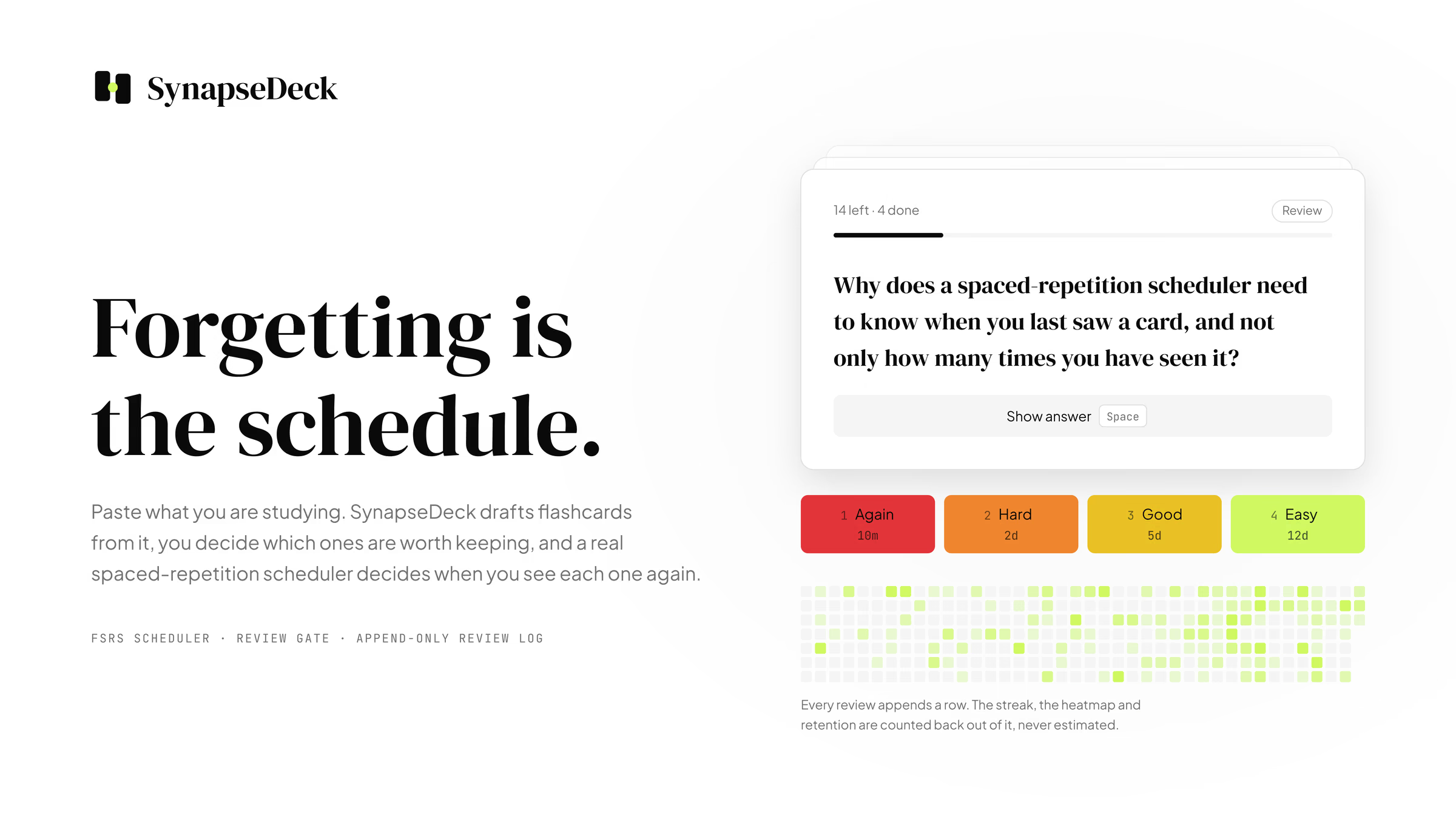
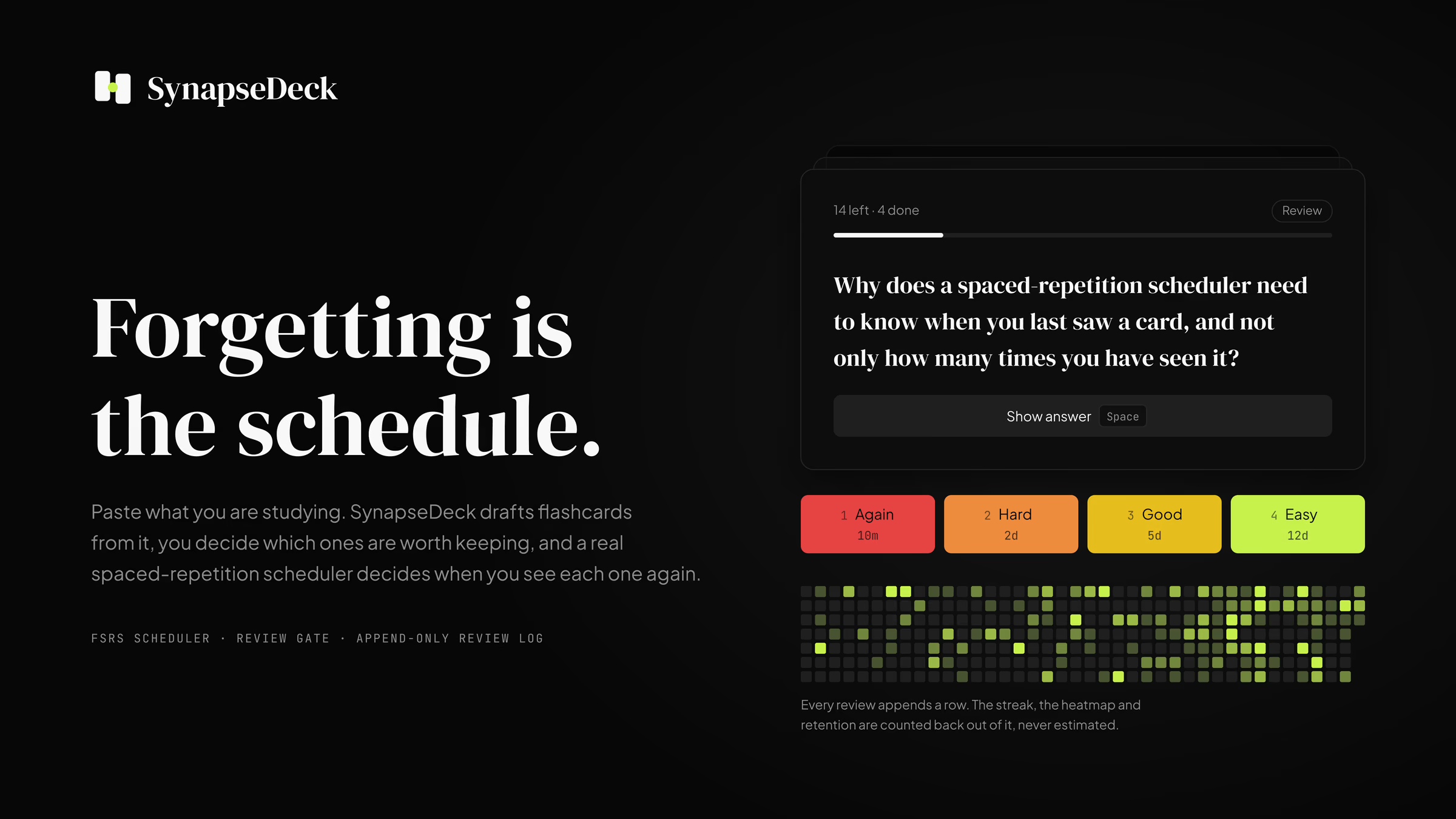
Real scheduling, not a guessed algorithm. FSRS (Free Spaced Repetition Scheduler) is the current state of the art in SRS research and is implemented via ts-fsrs. Every review logs complete pre- and post-state, enabling undo and future parameter optimization.
Three card types with discriminated union content
Basic Q&A, cloze deletion, and multiple-choice. Content shape varies by type; scheduling state does not. The scheduler is type-agnostic, so adding a fourth type later touches only rendering and validation.
First-class undo with complete snapshots
A mis-hit rating on a mature card irreversibly damages its schedule in other apps. Here, undo restores the complete pre-review FSRS state from the log, so one wrong tap is not a month-long punishment.
Honest progress tracking
Every metric on /progress — heatmap, streak, retention, due forecast, card state distribution — is counted from the review log. No estimated data, no invented XP. What the user sees is what they actually did.
Timezone-correct day boundaries
A day boundary is 04:00 in the user's timezone, following SRS convention. Streaks and heatmaps stay consistent across DST transitions and midnight-to-dawn study sessions.
Keyboard-first practice interface
Space to reveal, 1–4 to rate, E to edit, U to undo. Practice is built for speed. Every card is one keystroke away from the next.
Draft persistence and resumable generation
Cards are written to the database as they arrive, not held in React state. Refreshing mid-generation does not burn a paid generation; closing the browser leaves a resumable deck.
Lessons learned
- A review gate is not a nicety—it is the product's quality floor. Reviewing an LLM card for months costs more than not having it.
- Append-only logs are worth every row. The same table that powers scheduling also enables undo, progress tracking, and future optimizer training without migration.
- One Zod schema, enforced at every boundary. Client form, LLM output, database write—shared validation prevents the silent shape mismatches that corrupt data later.
- Honest metrics build trust. Users remember invented numbers; they trust data they can reason about.
- Streaming is not just UX—it is stability. The user watching cards appear knows the generation is working, and seeing the first card in 3 seconds instead of 20 changes the product's entire feel.
Case study
- Challenge
- Flashcard apps lock users into one scheduler and one card type forever. Changing either requires rebuilding the database. But the real hard problem is the 80% of generated cards that are useless—reviewing them for months because they exist is worse than not having them, and no LLM is good enough to skip the review gate.
- Decision
- Build the review gate first. Make it fast to use, let users edit before accepting, and persist drafts server-side so a refresh mid-generation is not catastrophic. Separate content from scheduling state at the database level, so the scheduler never reads the card payload and stays type-agnostic. Log every review completely—state before and after—so undo is exact and the app never corrupts a schedule silently.
- Outcome
- The result is a system where the user is in control. They decide what enters their deck and what stays out. Mis-hitting a rating is recoverable. Cards are retrieved at the right time, not guessed. And everything is measurable—the progress dashboard has no estimated data because every number came from the review log.
Tell me what you are building.
I read everything that arrives. If you are hiring, scoping a project, or stuck on a multi-tenancy or LLM integration problem, a few sentences about the constraint is enough to start a useful conversation.